
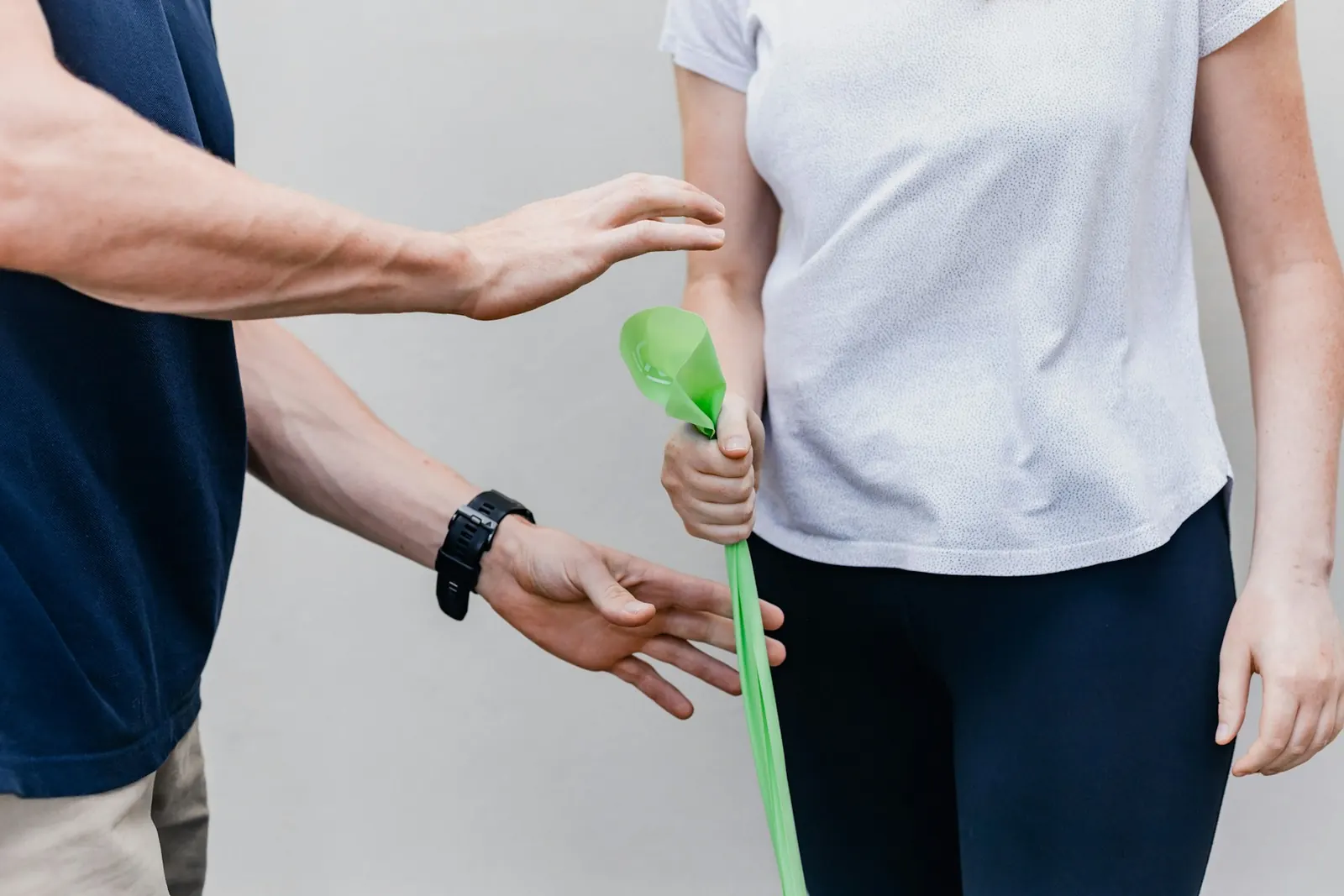
About rotator cuff injuries
Rotator cuff problems range from irritated, overloaded tendons (tendinopathy) to partial or full-thickness tears. Many tears develop gradually with age and do not always cause pain. Others follow a fall or a sudden heavy lift.
Most people do well with a structured strengthening programme. If you have significant weakness after an injury, or symptoms that are not improving, I can advise on seeing your GP for further investigation. If you have had surgery, rehabilitation follows your surgeon's protocol.
Common symptoms
- an ache on the outside of the upper arm
- pain when lifting your arm out to the side or overhead
- pain at night, especially lying on the affected side
- weakness when lifting or rotating the arm
Common causes
- repetitive overhead activity at work, in sport or in the garden
- a sudden increase in load, such as a new gym routine
- falls onto an outstretched arm
- age-related tendon changes
How physiotherapy can help
Every person is different, so treatment starts with a thorough assessment and a plan built around your goals. Depending on what you need, treatment may include:
- Assessment of strength, movement and pain-provoking positions
- Load management advice so you can stay active without flaring symptoms
- A progressive strengthening plan for the rotator cuff and shoulder blade
- Hands-on treatment and taping to ease pain while you build strength
- Rehabilitation after rotator cuff repair surgery
Ready to get started? Book an assessment at home or in clinic in Harpenden.
Things you can try at home
- Adapt, rather than stop, the activities that hurt
- Keep lifting tasks close to your body
- Use a pillow to support the arm at night
- Be consistent with your exercises - tendons respond to steady, progressive loading
If your symptoms are not improving, are getting worse or are affecting your sleep, work or exercise, it's worth getting them assessed.
When to get urgent help
Call 999 straight away if shoulder, arm or jaw pain comes with:
- chest pain or tightness, breathlessness, sweating or feeling sick - this can be a sign of a heart attack
- a sudden injury where the shoulder looks out of shape or you cannot move your arm at all
See your GP or call NHS 111 if the shoulder is hot, red and swollen, you feel feverish, or you have severe pain at night that does not settle.
Frequently asked questions
Do rotator cuff tears always need surgery?
No. Many people with rotator cuff tears improve with physiotherapy. Surgery may be considered in some cases, such as significant tears after an injury, and that decision is made with an orthopaedic specialist.
Should I stop exercising?
Usually not completely. Adjusting how much and what you do, while strengthening the shoulder, tends to work better than complete rest.
Related conditions
Treatments that may help
This page gives general information and is not a substitute for an individual assessment. If you are unsure whether physiotherapy is right for you, please email or call 07490 128910.