
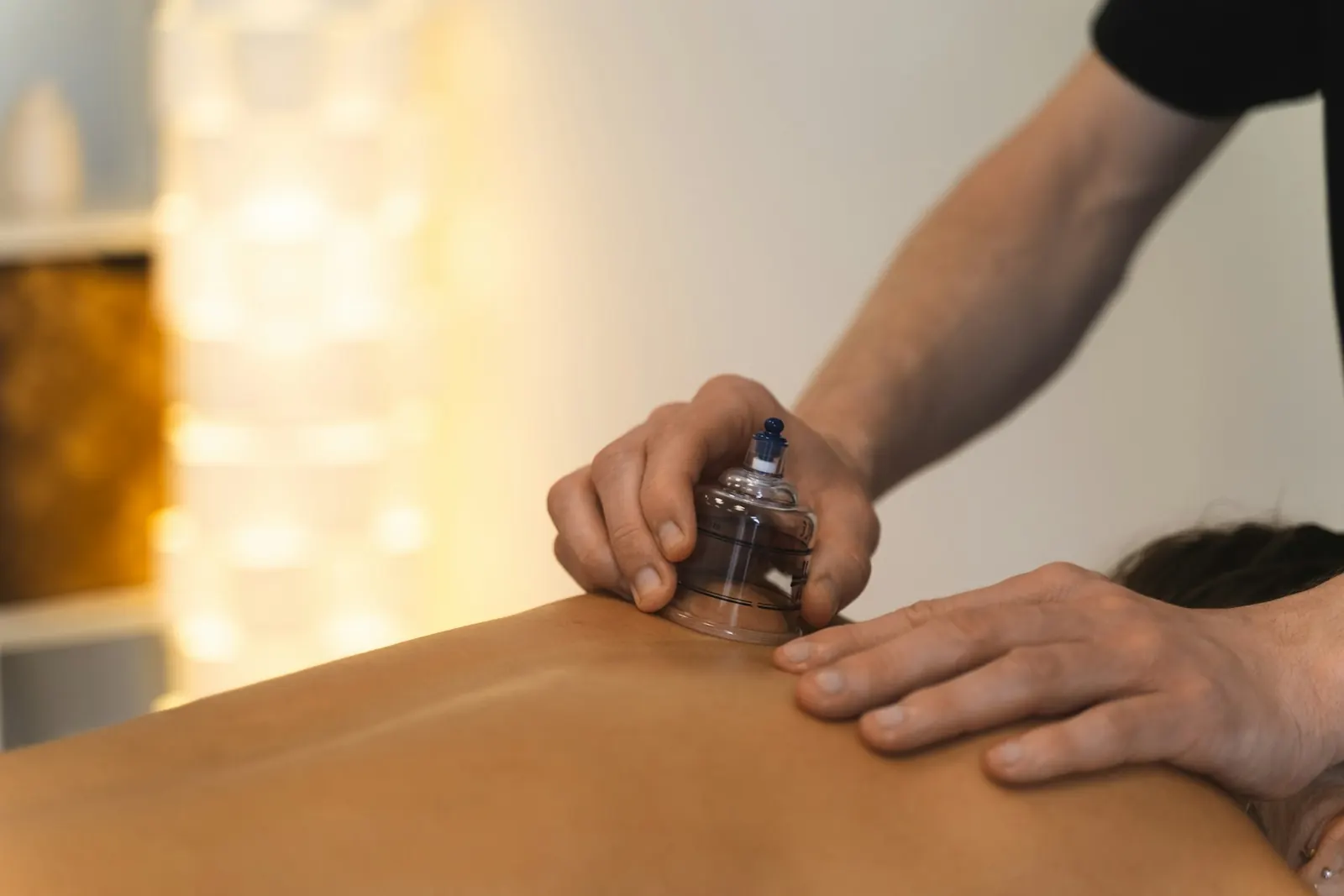
How dry cupping works
The suction gently lifts the skin, fascia and underlying soft tissues up into the cup - the opposite of massage, which pushes down. Many people find this helps ease muscle tension and stiffness.
How it may complement your treatment
- Blood flow - the suction draws blood to the area being treated.
- Muscle tension and fascia - the lifting sensation stretches the muscle fibres and surrounding connective tissue.
- Movement - easing tightness around a joint can help it move more freely.
Different techniques
- Static cupping - cups are placed on specific areas and left for a few minutes.
- Moving or gliding cupping - oil allows the cups to move along a muscle, combining cupping with a massage-like action.
- Functional cupping - you move and stretch while the cups are in place, to help restore movement.
Things to know
Cupping commonly leaves temporary circular marks that look like bruises. They are caused by the suction and usually fade within a few days to a couple of weeks. Cupping is not suitable for everyone - for example people with certain skin conditions or bleeding disorders, or during pregnancy - so a full assessment comes first.
Not sure if physiotherapy can help? Get in touch, or book your assessment online.
Frequently asked questions
Does cupping hurt?
Most people describe a pulling or tight sensation rather than pain. The suction can be adjusted to keep you comfortable.
Will I have marks?
Often, yes. The circular marks are temporary and usually fade within a few days to two weeks.